SOUTH AFRICA AND NIGERIA: TRADE AND INVESTMENT
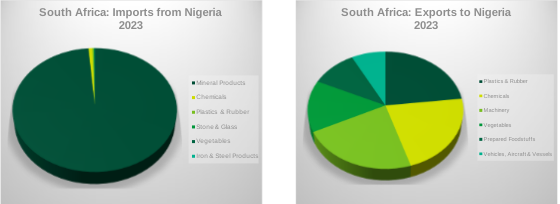
- South Africa’s imports from Nigeria are dominated by crude oil and petroleum products.
- South Africa exports manufactured goods, machinery, chemicals, fruit, processed foods, mining equipment, and professional services to Nigeria.
- Nigeria is one of South Africa’s most important trading partners in West Africa.
- Both governments are trying to diversify trade away from the traditional oil-for-manufactures model toward technology, agriculture, services, logistics, tourism, and industrial products.
South Africa-Nigeria Trade Information
JOINT MINISTERIAL ADVISORY COUNCIL ON INDUSTRY, TRADE & INVESTMENT (JMACITI)
The South Africa-Nigeria Joint Ministerial Advisory Council on Industry, Trade & Investment is a bilateral initiative to boost relations between Africa’s two biggest economies.
It was launched in November 2021 on the side lines of the 12 Session of the Binational Commission sitting in Abuja.
It is led by the Ministry of Trade, Investment and Competition (DTIC) in South Africa and the Federal Ministry of Industry, Trade & Investment (FMITI) in Nigeria. The two Ministries will jointly co-ordinate the work of a private sector Advisory Council, which comprises companies and organizations in South Africa and Nigeria.
Each country has its own process, and the two will come together to discuss market entry and operational challenges as well as investment opportunities in each other’s countries.
The Council is expected to serve as a critical vehicle for facilitating and promoting private sector participation in Africa’s two largest economies and strengthening trade and investment ties.